
How Does Your EPD Measure Up?
Blog
Read more

Safe propane for your business

National delivery, local service

Tailored pricing to your business needs
Data centers power the digital world. Every email, online purchase, video stream, cloud application, and AI query relies on data centers operating around the clock. As demand for digital services continues to grow, so does the need for reliable, resilient power infrastructure.
However, the rapid expansion of data centers has also led to increased public scrutiny. Communities, utilities, and policymakers are asking important questions about energy consumption, grid reliability, emissions, and local environmental impacts. As operators work to address these concerns, propane is emerging as a practical solution that can help support both reliability and sustainability goals.
Modern data centers consume significant amounts of electricity. The growth of cloud computing, artificial intelligence, and data storage has accelerated energy demand, placing additional pressure on utility infrastructure and regional power grids. In the U.S. alone, data centers consumed roughly 176–183 terawatt-hours (TWh) of electricity annually in recent years, representing about 4.4% of total U.S. electricity use. [congress.gov] Globally, that figure reached about 415 TWh in 2024, with projections suggesting it could nearly double by 2030. [thenetworkinstallers.com] To put that into perspective, a single hyperscale data center can draw as much power as tens or even hundreds of thousands of homes – similar to a small city!
In some areas, utility providers are struggling to keep pace with the power requirements of new facilities. This has led to concerns about grid capacity, infrastructure upgrades, and long-term energy planning.
Reliable backup power is essential for data centers. Even brief interruptions can result in service disruptions, data loss, and significant financial consequences.
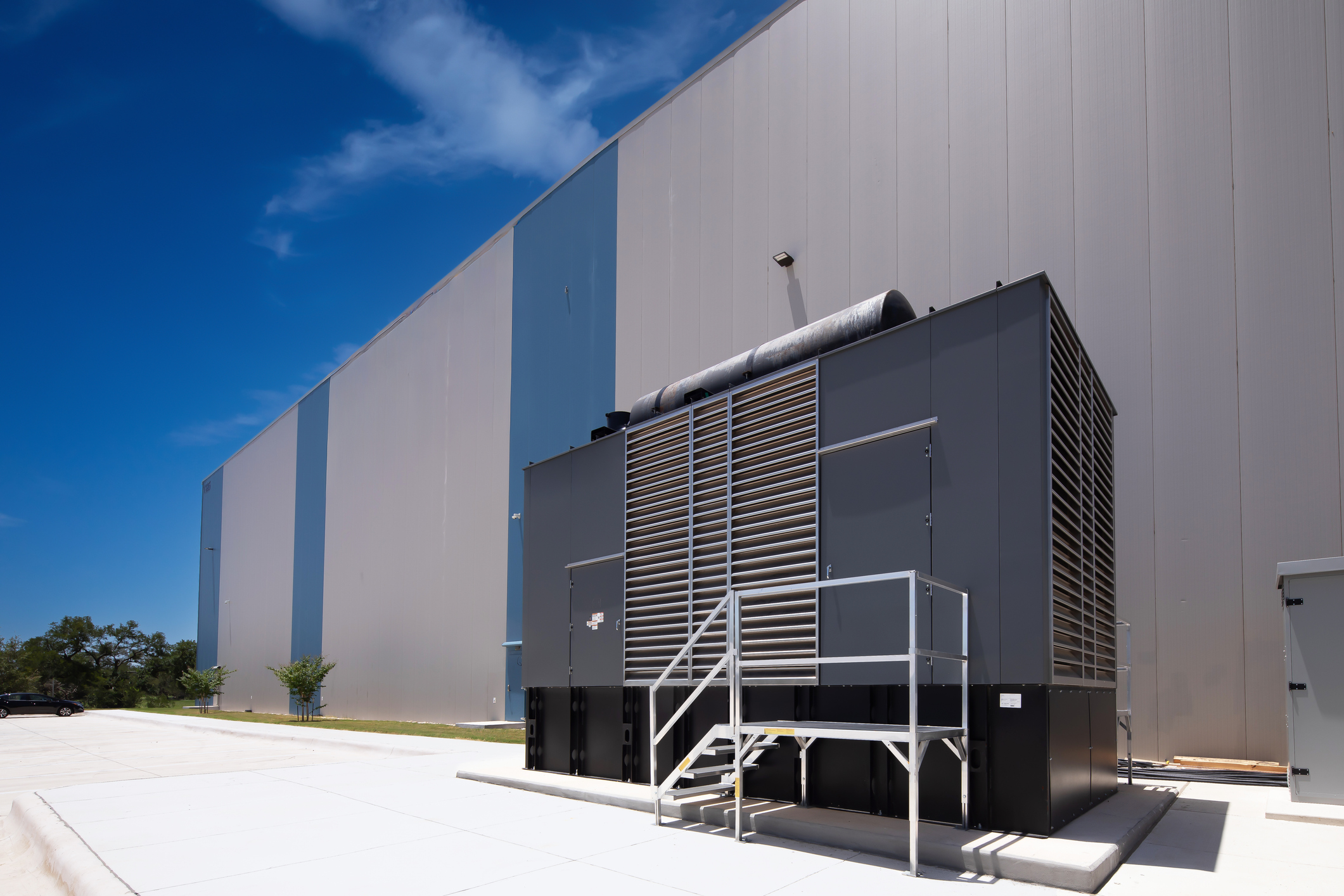
Traditionally, many facilities have relied on diesel generators for emergency power. While effective, diesel generators can raise concerns related to emissions, fuel storage, noise, and air quality, especially when facilities are located near residential or commercial developments.
Practically speaking, communities notice:
Even if these systems run only during outages or testing, their presence can create strong local opposition.
As new data centers are proposed, local communities often evaluate their impact on the surrounding area. Questions about energy use, environmental performance, and operational resilience have become increasingly common.
Utilities weren’t built for sudden, high-density loads like clusters of hyperscale data centers. As demand surges, the grid is feeling the pressure.
These realities fuel community concerns about reliability and rising costs, especially when residents hear that new infrastructure may increase electricity rates or shift costs onto households.
To maintain community support and meet evolving sustainability expectations, operators are exploring more flexible energy solutions.
Propane generators offer a lower-emission alternative to traditional diesel backup systems. Compared to diesel, propane can reduce nitrogen oxides (NOx), particulate matter (PM), and greenhouse gas emissions while still providing dependable standby power when it is needed most [epa.gov].
This helps data centers:
For operators seeking to reduce their environmental footprint, propane can help support sustainability initiatives without sacrificing reliability.
Unlike electricity delivered through the grid, propane offers a major operational advantage: on-site storage. This allows data centers to maintain access to a dedicated energy supply during grid outages, severe weather events, or utility disruptions.
With fuel available on-site, facilities can strengthen their resilience and reduce dependence on external infrastructure during emergencies.
This matters most in regions where the grid is already strained. Adding self-contained backup reduces the risk of overloading local infrastructure and can reassure utilities and regulators.
Many data center operators are pursuing aggressive environmental targets, but face immediate constraints:
Propane can serve as a practical bridge fuel that helps reduce emissions today while organizations continue investing in renewable energy, battery storage, and other emerging technologies.
This makes it a pragmatic step toward decarbonization while larger infrastructure catches up.
Backup generators must be tested regularly. Propane systems typically:
That translates into a real (and often overlooked) benefit: better relationships with nearby communities.
As data centers continue to expand, operators will face increasing pressure to balance reliability, sustainability, and community expectations. While there is no single solution to every energy challenge, propane offers a versatile option that can help address several of the industry’s most pressing concerns.
From lower-emission backup power and onsite fuel storage to enhanced resilience and operational flexibility, propane can play an important role in supporting the next generation of data center infrastructure.