
Winter Construction Planning Checklist: How to Keep Your Projects Moving When Temperatures Drop
Blog
Read more

Safe propane for your business

National delivery, local service

Tailored pricing to your business needs
Environmental Product Declarations (EPDs) are becoming an increasingly important part of the asphalt industry. But simply having an EPD is only the beginning.
The real question is: How does yours measure up?
An EPD provides standardized information about the environmental impacts associated with producing a particular asphalt mixture. For asphalt producers, that information can do more than satisfy a project requirement. It can provide a closer look at where impacts occur within your operation and help identify opportunities to improve.
And one area worth examining is the energy used at the plant.
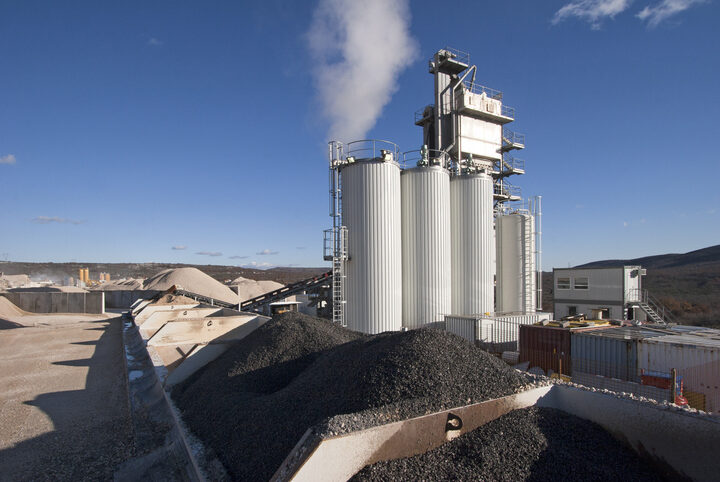
Fuel consumption for burners, heaters and other equipment is included in the data used to develop an asphalt EPD, which means the fuel you use and how efficiently you use it can influence your results (National Asphalt Pavement Association, Product Category Rules for Asphalt Mixtures, Version 2).
So, when was the last time you looked beyond the final number and asked what is driving your EPD?
An EPD communicates environmental impacts based on a life cycle assessment (LCA). For asphalt mixtures, EPDs generally report cradle-to-gate impacts across three primary stages:
The results include several environmental indicators, including Global Warming Potential (GWP), which is expressed in kilograms of carbon dioxide equivalent (kg CO2e) per unit of asphalt mixture (National Asphalt Pavement Association, Product Category Rules for Asphalt Mixtures).
That distinction between A1, A2 and A3 is important because it allows producers to see where impacts are occurring.
Raw material selection can influence A1. Transportation distances and methods can influence A2. Plant operations, electricity and fuel consumption can influence A3.
And unlike some upstream factors that may be more difficult for an asphalt producer to control directly, A3 is largely about what happens inside your operation.
A single GWP number doesn’t tell the whole story.
Instead, look at how your results break down between A1, A2 and A3. Then start asking questions.
NAPA’s Emerald Eco-Label Optimizer is designed around this concept. Producers can change variables such as burner temperature, aggregate moisture content and hauling distance to evaluate how those changes could affect GWP before making an operational change. The tool also allows producers to evaluate the financial implications of changes such as switching fuel types (National Asphalt Pavement Association).
In other words, an EPD shouldn’t necessarily be viewed as a static report card. It can also be a starting point for identifying where operational changes may make a difference.
Comparing EPDs isn’t always as straightforward as finding the lowest number.
Mixture design, nominal maximum aggregate size, recycled material content, plant characteristics, geography, transportation distances and other variables can all affect results. Comparisons are most useful when products serve similar functions and are evaluated under consistent methodologies and system boundaries.
That makes context important.
Rather than asking only, “Is our number good or bad?” producers can ask:
How does this mix compare with similar mixes, and which parts of our operation are contributing most to the result?
That second question is where your EPD becomes much more useful.
For asphalt producers looking for opportunities within their direct operations, A3 deserves particular attention.
The asphalt PCR requires producers to account for on-site fuel consumption, including fuel used by the primary and secondary burners, hot-oil heaters, direct-fired asphalt tank heaters and other applicable combustion equipment. Fuel options identified in the PCR include natural gas, propane, diesel, recycled fuel oil, residual fuel oil, biofuels and others (National Asphalt Pavement Association, Product Category Rules for Asphalt Mixtures, Version 2).
That means fuel isn’t sitting outside your EPD calculation. It is one of the inputs that helps create it.
The amount of fuel required matters, too. Aggregate moisture, production temperatures, equipment condition, burner performance and overall plant efficiency can all affect energy consumption. That’s why evaluating your EPD should involve more than simply comparing one fuel’s emissions factor against another.
The better question is: What would changing our fuel or improving our fuel use do to our actual plant results?
For plants evaluating their fuel strategy, propane is one option that can be modeled directly within the EPD process.
Propane is specifically recognized as a burner fuel in NAPA’s asphalt PCR.
Propane has a lower direct carbon dioxide emissions factor per unit of energy than residual fuel oil. EPA data lists propane at approximately 139 pounds of CO2 per million Btu, compared with approximately 166 pounds of CO2 per million Btu for residual fuel oil (U.S. Environmental Protection Agency, Assumptions and References for Household Carbon Footprint Calculator).
For a plant currently using a heavier petroleum fuel, that makes propane even more worth evaluating as part of a broader EPD improvement strategy.
However, fuel emissions factors alone do not determine an EPD.
The environmental impact associated with a fuel also depends on upstream production, transportation, actual plant consumption, burner efficiency and other life-cycle inputs. NAPA’s asphalt LCA work demonstrates that different fuel scenarios can produce different overall GWP results once these factors are included (National Asphalt Pavement Association, Update to the Life Cycle Assessment for Asphalt Mixtures).
That’s why the goal shouldn’t be to assume that a fuel switch will improve an EPD. Model it. Measure it. Then determine whether it makes sense for your operation.
If improving your EPD is the goal, changing fuel may be only one piece of the equation.
A plant may find opportunities through a combination of strategies: reducing aggregate moisture, optimizing production temperatures, improving burner performance, changing material sourcing or transportation, increasing operational efficiency, or evaluating a different energy source.
Fuel strategy fits into that larger conversation.
For producers currently relying on diesel, fuel oil or another fuel, evaluating propane can provide another scenario to run through the numbers. And because the decision affects both environmental performance and operating costs, it makes sense to evaluate both sides of the equation before making a change.
EPDs are increasingly being used to help transportation agencies understand the environmental impacts associated with construction materials and make more informed procurement decisions. The Federal Highway Administration has identified EPDs as a tool that can support procurement decisions and help quantify embodied-carbon reductions in pavement projects (Federal Highway Administration, EPDs for Sustainable Project Delivery).
For asphalt producers, that creates a reason to think beyond simply generating an EPD.
Your EPD can help you understand your plant.
It can show where impacts are concentrated. It can help you evaluate potential operational changes. And it can give you a way to model whether investments in efficiency, materials, transportation or energy could improve your position.
So don’t stop at asking whether you have an EPD.
Ask how yours measures up.
And if plant energy is an area you want to evaluate, take a closer look at what you’re burning, how much you’re using and what alternatives are available.
Considering propane for your asphalt plant? DCC Propane can work with your team to evaluate your fuel requirements, storage needs and supply options so you can determine whether propane makes sense for your operation and your EPD strategy. Contact us to learn more.